
Home » How Strategic Web Design Supports Long-Term Business Growth
If your organization has been operating for any number of years, it’s safe to say that you are not where you started. Your organization has evolved to a level, higher than where it was in the beginning, and you have most likely had to make adjustments to accommodate the growth and evolution of your company. The same should be true for your website. If your business has evolved, then your website should not remain a reflection of what it once represented, but what it has become. If your organization has evolved, expanded or matured over the years, but your website still reflects an earlier season, it may be quietly limiting your impact, efficiency and credibility.
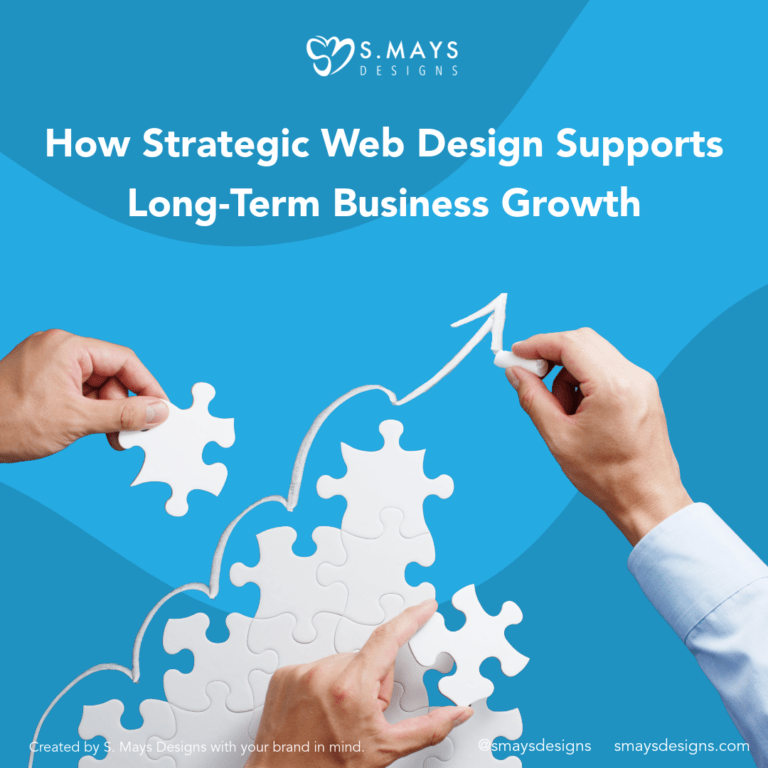
The solution to ensuring your website is reflecting your current mission, vision, values, standard of service, and all the other components that define your brand and attracts those it serves, is not finding a nice looking template and swopping the old design out. The solution is strategic web design. Strategic web design isn’t about aesthetics alone; it’s about building a digital foundation that supports long-term growth, operational efficiency and mission-driven leadership. Strategic web design aligns vision, structure, messaging, and systems, so that your website works for your organization and not against it.
Strategic web design goes far beyond visuals or templates. It begins with intention and ends with measurable outcomes. Strategic web design includes: clear business / ministry goals, audience clarity and user journey mapping, brand messaging aligned with mission and values, conversion-focused structure, systems that support automation and efficiency, and scalability for future growth. Unlike DIY or template-based sites, strategic websites are built to support leadership, growth, and sustainability, not just “look good”.
If you decide to keep your website stuck in the past or opt out of taking the strategic web design route, you run a high risk of hitting the most common growth blockers. Growth blockers will cost you, and unfortunately many organization leaders don’t realize their website growth blockers and how much they’re costing them until the growth stalls. Some common growth blockers are: low-quality or inconsistent inquiries, manual follow-ups and inefficient workflows, confusing messaging that lacks authority, missed opportunities for lead nurturing, and the communication of the mission and vision causing brand misalignment. A website that lacks strategy, often creates friction instead of clarity, both internally and externally and unintentionally undermine trust and momentum.
A strategic website design supports long-term business growth, because it is created with growth in mind. It has flexible architecture that adapts as services expand, clear navigation that supports decision making and messaging that remains strong as the organization evolves. The foundation grows with you instead of you having to rebuild every few years.
To sum it all up, your website should serve as a digital business partner that supports where you’re going, not hold you where you’ve been. Ask yourself this questions, “Is my website built for where we’re headed or for where we started?”. A strategic web design is an investment in sustainability, impact, and leadership. If you want support for long-term growth, to strengthen operational efficiency, attract aligned opportunities and reflect excellence in bother mission and execution, then you need a digital presence that reflects the level at which you are called to lead.
 Stephanie